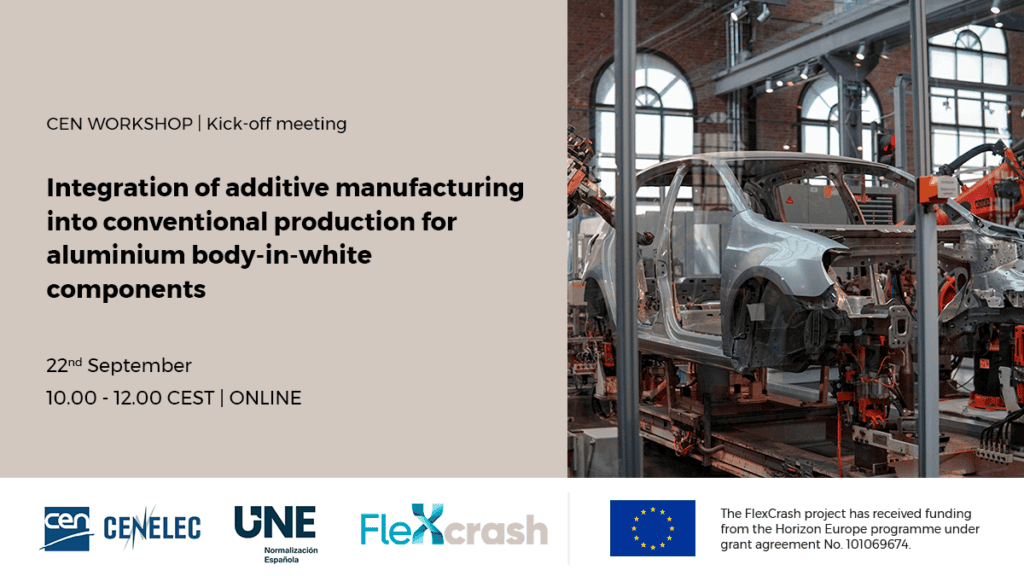
The integration of additive manufacturing (AM) into conventional production processes for aluminium body-in-white (BIW) components offers significant potential for the automotive industry, particularly in terms of weight reduction, part consolidation, sustainability and improved crash performance. However, the wider industrial adoption of these technologies is currently hindered by the lack of harmonized guidelines for their technical validation and environmental and economic assessment.
This CEN/WS aims to develop two CWAs (Workshop Agreements) related to the integration of additive manufacturing into conventional production for aluminium body-in-white components. The first one will provide guidelines for manufacturing and structural performance validation, with a focus on crashworthiness. The second one will provide guidelines for environmental and economic assessment of hybrid manufacturing routes.
- CWA 1: Integration of additive manufacturing into conventional production for aluminium body-in-white components — Guidelines for manufacturing and structural performance validation.
- CWA 2: Integration of additive manufacturing into conventional production for aluminium body-in-white components — Guidelines for environmental and economic assessment.